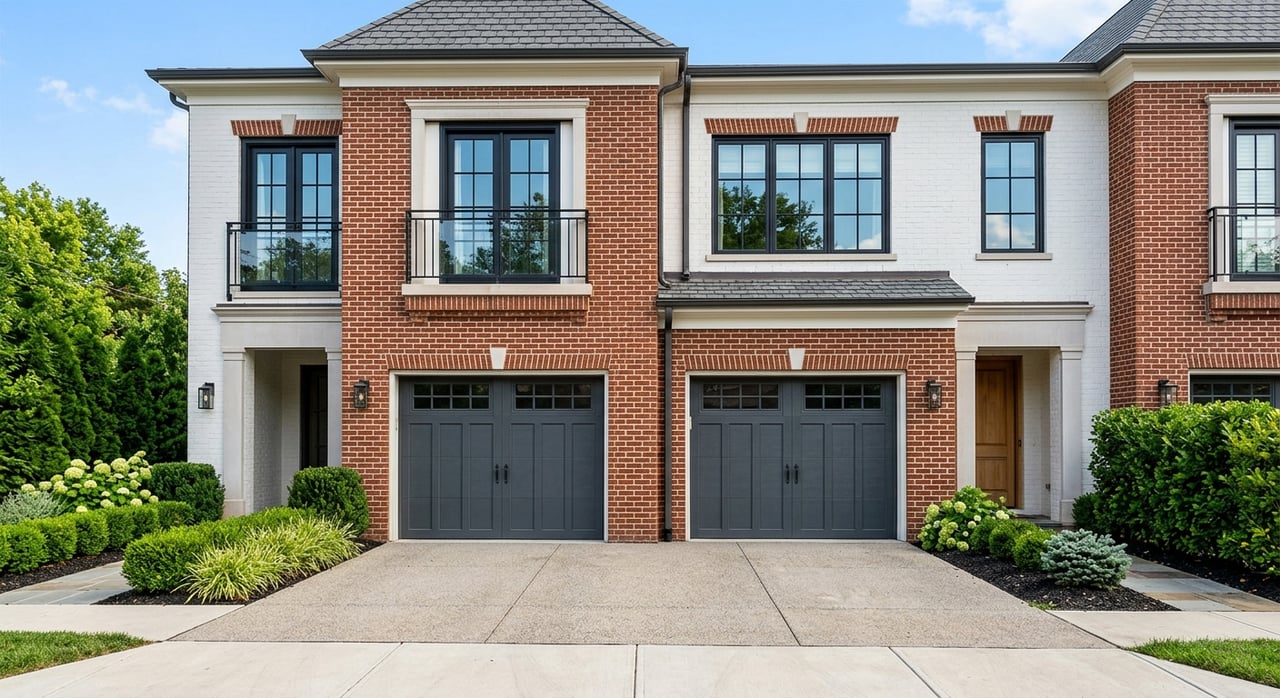
If you want a home in Sandy Springs without taking on all the upkeep of a detached house, condos and townhomes deserve a close look. You may be balancing budget, commute, parking, and monthly costs all at once, and attached homes can solve some problems while creating a few new questions. This guide will help you understand how Sandy Springs condo and townhome buying works, what to compare, and what to ask before you commit. Let’s dive in.
Why Sandy Springs fits attached-home buyers
Sandy Springs offers a strong setup for condo and townhome buyers who want convenience and flexibility. The city has four MARTA rail stations, bus routes 5, 87, and 148, plus major road access from I-285, GA 400, and Roswell Road. That makes it easier to weigh your home choice against how you actually move through the week.
The city also focuses mixed-use development in areas including Greater City Springs, Central Perimeter, North End, Powers Ferry, Neighborhood Village, and Crossroads. For buyers, that matters because these areas can offer a more connected lifestyle with housing near shops, services, and public spaces. In other words, attached homes are part of the city’s growth pattern, not an afterthought.
City Springs is one of the clearest examples. The city describes it as a 14-acre mixed-use downtown with City Hall, a performing arts center, conference space, City Green, restaurants, exercise boutiques, and apartment homes. If you like the idea of low-maintenance living near everyday amenities, this kind of setting may be especially appealing.
Condo vs. townhome in Sandy Springs
Both property types can work well, but they usually serve different priorities. A condo often makes sense if you want a simpler footprint, shared amenities, and less exterior responsibility. A townhome may suit you better if you want more separation, more square footage, or an attached garage.
In Sandy Springs, inventory data shows both are meaningful parts of the market. Redfin’s latest city snapshot reported 243 condos and 120 townhouses for sale last month, alongside a median sale price of $570,000 and a median 42 days on market. That gives you real options across different price points and community styles.
Here is a simple way to think about the tradeoff:
| Type | Often appeals to buyers who want | Common things to review |
|---|---|---|
| Condo | Lower-maintenance living, shared amenities, lock-and-leave convenience | HOA scope, parking setup, building rules, insurance responsibilities |
| Townhome | More space, multi-level layout, attached garage in some communities | Exterior maintenance rules, garage and guest parking, dues, reserve funding |
What prices look like now
One of the biggest advantages of shopping attached homes in Sandy Springs is the wide price range. Current Zillow examples show condos starting around $135,900, with many options in the $150,000 to $325,000 range, mid-market units around $380,000 to $540,000, and at least one larger condo listed at $735,000. That spread can give you several entry points depending on your goals.
Townhomes also cover a broad range. Current listing examples run from about $220,000 up to $1.2 million, with homes listed around $235,000, $280,000, $367,500, $440,000, $485,000, $545,000, $699,000, and $725,000. If you want attached living but need more room or a garage, the townhome segment may open up more choices.
The key is not to judge value by price alone. Age, building style, location, amenities, and monthly dues can all change the true cost of ownership. A lower list price can still lead to higher monthly carrying costs, while a higher list price may come with features that reduce your day-to-day hassle.
Why age and amenities matter
Sandy Springs attached homes span very different eras and formats. Current examples include a 1968 condo on Roswell Road, a 1990 high-rise condo on Hammond Drive, a 2012 townhome on Glisten Avenue, and a 2020 new-construction condo at Aria. That kind of range means you are not comparing one product type. You are comparing very different ownership experiences.
Newer or amenity-heavy communities often carry higher dues, while older or more basic communities may look less expensive at first glance. That does not automatically make one better than the other. It simply means you need to compare what you are paying for, what systems may be aging, and how the community handles upkeep.
A newer community may offer a pool, clubhouse, park access, or garage-oriented design. An older community may offer a lower entry price and more established surroundings. Your best fit depends on whether you care most about monthly simplicity, purchase price, amenities, or long-term maintenance risk.
How to evaluate HOA fees
HOA fees are one of the most important parts of any Sandy Springs condo or townhome purchase. They vary widely, and the number itself tells you very little unless you know exactly what is included. A lower fee is not always the better value.
Current examples show just how different fee structures can be. One Aria property listed a $235 monthly HOA with a private garage, pool, clubhouse, community center, and park access. Another gated condo listed a $509 monthly HOA that included gas, water, trash, insurance, pool, fitness center, termite bond, and common-area maintenance.
There are also communities with annual fees instead of large monthly dues. One Highlands townhome example showed a $324 annual HOA covering structure maintenance, trash, grounds, pest control, and reserve fund contributions. Another example at Park Towers showed a $6,610 annual HOA that included security, swimming, tennis, trash, and management.
When you compare homes, focus on what the fee covers rather than the headline number. Ask whether the association handles exterior maintenance, insurance, water, gas, trash, pest control, amenities, security, and reserves. Those details shape your true monthly cost and can affect future surprise expenses.
Parking can change your decision
In Sandy Springs, parking is not a small detail. It can be one of the biggest factors in whether a condo or townhome works for your daily life. If you own more than one car, have overnight guests, or need covered parking, you should verify the details early.
City code treats parking differently in different districts. The city says guest parking is required only for developments with five or more residential units, parking is generally provided on-site, and no minimum vehicle parking ratio applies in the Perimeter Center and City Springs districts. The code also says new development in PX and PM districts must unbundle parking charges from rents or sale price, except for townhouse units.
That means parking arrangements can vary more than buyers expect. Recent listing examples show a condo at 795 Hammond Drive with one assigned deeded space in an attached gated garage, a condo at 799 Hammond Drive with two assigned covered spaces plus guest parking, and a townhome at 7860 Glisten Avenue with an attached two-car garage and four total spaces. You should confirm whether spaces are deeded, assigned, covered, garage, or guest only.
Commute access is a real advantage
If your work or routine takes you into Buckhead, Midtown, Downtown, or the airport area, Sandy Springs has a practical edge. The city says MARTA rail connects Sandy Springs with those job centers. Its stations include Medical Center, Dunwoody, Sandy Springs, and North Springs.
That matters because attached-home buyers often prioritize convenience and predictability. A home near rail access or major roads may support a lower-maintenance lifestyle while cutting some commute stress. If transportation access is high on your list, it should be part of your search strategy from the start.
Documents to review before closing
Association due diligence is critical in Georgia, and it matters even more in a market like Sandy Springs where communities differ so much by age, amenities, and building type. According to summaries from the Georgia General Assembly, recent law updates addressed information on request, statements of amounts owed, enforcement, and meeting rules for condominium and property owners’ association instruments. For buyers, the takeaway is simple: read the documents carefully.
Before you waive contingencies or close, ask for the declaration, bylaws, budget, reserve information, insurance summary, recent board minutes, rental rules, and any history of special assessments. These records can help you understand both your monthly obligations and the health of the association. They can also reveal issues that may not show up during a quick showing.
You want a clear picture of who handles what. In some communities, the association may cover parts of the structure, utilities, or pest control. In others, the owner may carry more responsibility than expected.
Questions to ask on every tour
Even a beautiful home can be the wrong fit if the community rules or costs do not line up with your needs. Keep your tour questions simple and specific so you can compare properties fairly.
Ask these questions every time:
- How many parking spaces come with the home?
- Are the spaces deeded, assigned, covered, garage, or guest only?
- What exactly does the HOA fee cover, and what is excluded?
- Are any special assessments planned or already in place?
- Who handles the roof, exterior, windows, HVAC, trash, water, gas, pest control, and reserve funding?
- How much guest parking is available?
- Are there restrictions for overnight visitors or second cars?
- Are rental caps, lease minimums, pet rules, or approval requirements in force?
- What is the current reserve position?
- What major projects were discussed in the latest board minutes?
- Is the community dealing with litigation, large insurance deductibles, or parking policy changes that could affect your costs?
These questions matter in Sandy Springs because parking rules, fee inclusions, and amenities can change sharply from one community to the next. The more clearly you compare them, the more confident your decision will be.
How to shop smarter in Sandy Springs
A good attached-home search starts with your lifestyle, not just square footage. Decide what matters most to you: price, commute convenience, garage parking, low monthly dues, newer construction, or amenity access. Once you know your priorities, it becomes much easier to filter out homes that look good online but do not fit in real life.
It also helps to compare total monthly cost, not just purchase price. That means looking at your payment alongside HOA dues, parking setup, and any likely maintenance responsibilities. In Sandy Springs, that fuller view is often what separates a smart buy from a frustrating one.
If you want a condo or townhome in Sandy Springs, a focused plan can save you time and stress. The market offers real variety, but that variety means details matter. If you want personal guidance and a clear next step, Malka Shulman is ready to help you compare options and move forward with confidence.
FAQs
What is the difference between buying a condo and a townhome in Sandy Springs?
- A condo often offers lower-maintenance living and shared amenities, while a townhome may offer more space, more separation, and an attached garage in some communities.
What price range should you expect for condos in Sandy Springs?
- Current examples range from about $135,900 to $735,000, with many condos listed between roughly $150,000 and $540,000.
What price range should you expect for townhomes in Sandy Springs?
- Current examples range from about $220,000 to $1.2 million, with many listings spread across the mid-$200,000s through the $700,000s.
What should HOA fees cover in a Sandy Springs condo or townhome community?
- Coverage varies by community, but may include items like water, gas, trash, insurance, exterior maintenance, pest control, amenities, security, and reserve funding.
Why is parking so important when buying an attached home in Sandy Springs?
- Parking setups vary widely by property and district, so you should confirm the number of spaces and whether they are deeded, assigned, covered, garage, or guest only.
What documents should you review before closing on a Sandy Springs condo or townhome?
- Ask for the declaration, bylaws, budget, reserve information, insurance summary, recent board minutes, rental rules, and any special-assessment history before closing.
Why do Sandy Springs condos and townhomes vary so much in monthly cost?
- Monthly cost can change based on the home’s age, amenities, parking, building type, and what the HOA fee includes or excludes.