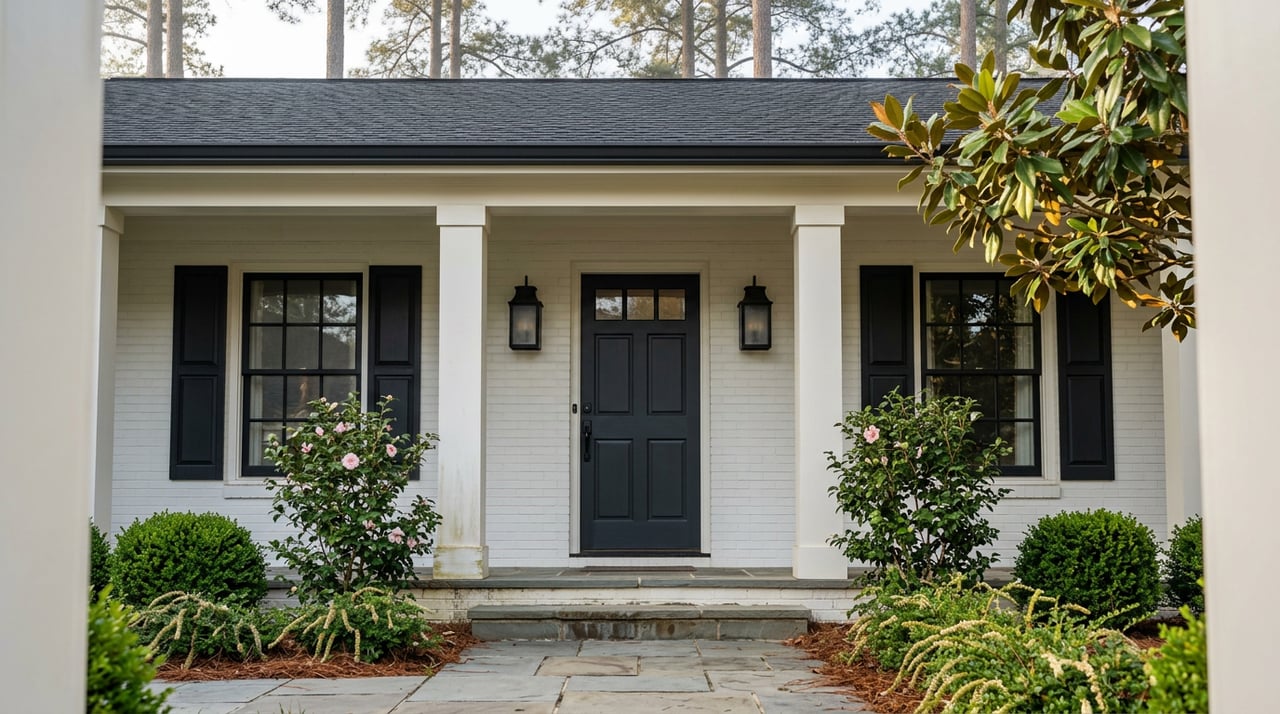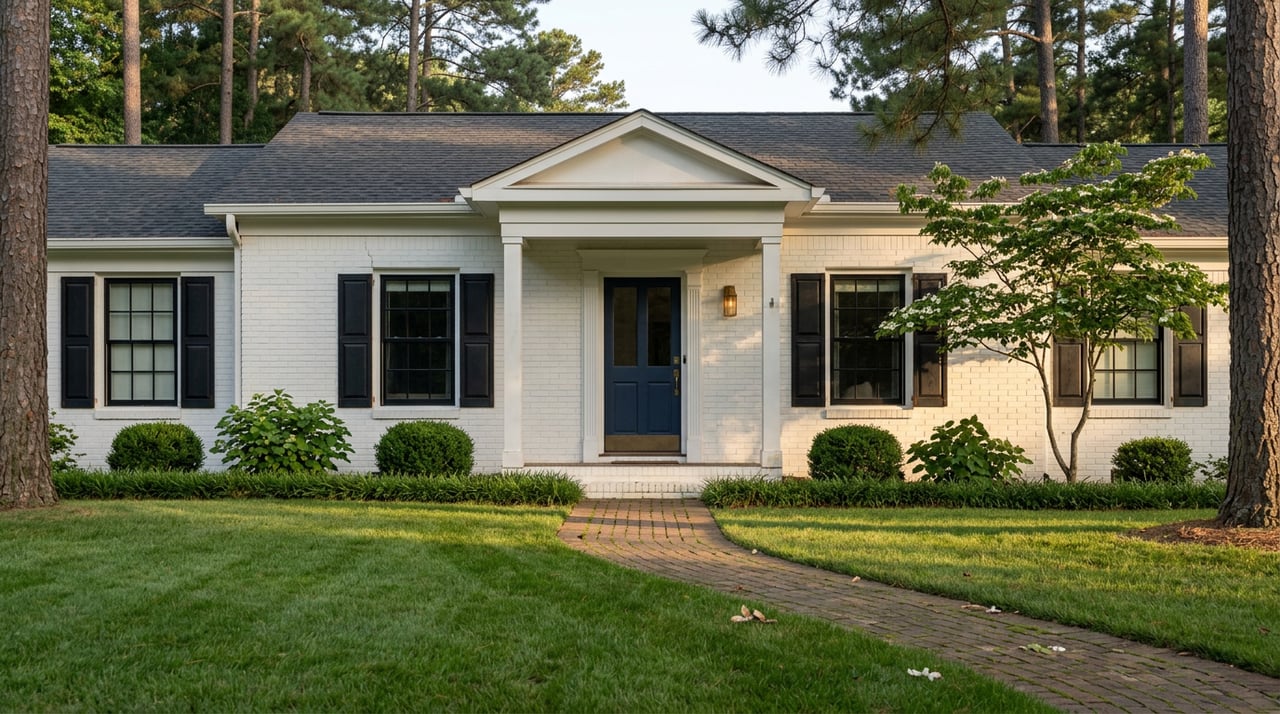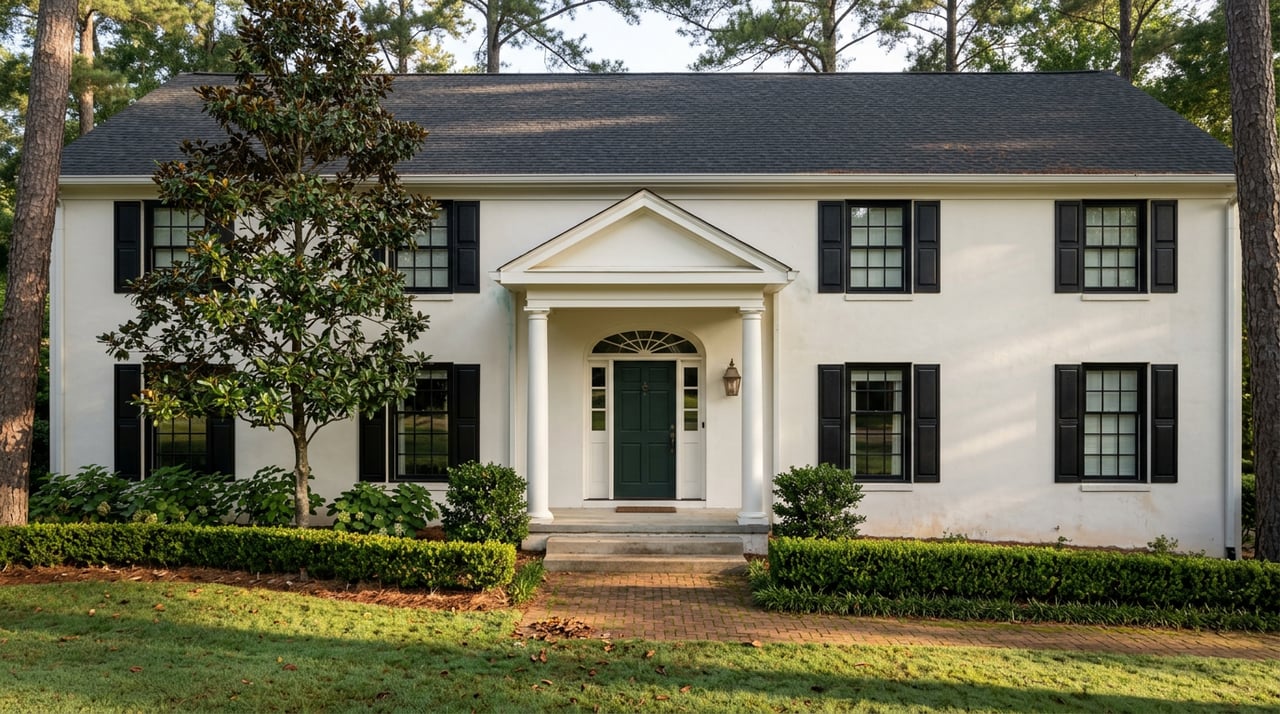
"The Commission does not have the authority to regulate alteration of the exterior paint color of a building within a historic district."
That line comes from a 2014 opinion written by the Georgia Attorney General's office, at the request of Roswell's own city attorney, specifically about Roswell's Historic Preservation Commission. Most buyers walking Canton Street assume the opposite. They picture swatches submitted for approval, a volunteer board debating whether their front door should be sage or navy, months added to a simple refresh. That fear is wrong, and knowing why it's wrong tells you something more useful than the fear itself: it tells you exactly where the real friction sits, and where it doesn't.
If you're evaluating a home inside Roswell's 640-acre Historic District, the paint question is the one people ask first and worry about most. It's also the one with the clearest answer. The harder question, the one that actually shapes your renovation timeline and budget, is what happens the day you decide to do something more than repaint.
What actually needs a hearing
Roswell's Historic Preservation Commission reviews exterior work inside the district boundary, and its scope is broader than most buyers expect. According to the city's own description of the board's authority, a Certificate of Appropriateness is required before you can:
- Construct a new building on the property
- Change the exterior architectural appearance of an existing building
- Demolish or move a structure
- Alter external environmental features on the site
That last category catches people off guard. It's not limited to the house itself. Site work, retaining walls, and other exterior features tied to the property's historic character can fall under the same review.
What doesn't need one
Georgia's state Historic Preservation Act defines what counts as a "material change in appearance," the trigger that requires a Certificate of Appropriateness before work begins. Exterior paint color is explicitly excluded from that definition. The 2014 Attorney General opinion walked through the statute's own language and confirmed that a local commission, including Roswell's, has no authority to regulate it, no matter what a homeowner or a well-meaning HOA might assume.
Practically, that means you can repaint a historic home's trim, siding, or shutters without filing anything with the city. The Georgia Historic Preservation Act protects against inappropriate alterations and incompatible new construction, but color was carved out on purpose. A house's shape, materials, and architectural detail carry the historic designation. Its paint job does not.
The gate most buyers miss
Here's the part that actually matters for a purchase timeline. A Certificate of Appropriateness isn't a parallel track that runs alongside your regular building permit. It's a prerequisite. The Georgia Department of Community Affairs' own preservation guide states plainly that a COA is required before a building permit can be issued, and that work completed without one can lead to fines, permit delays, and the reversal of unapproved alterations.
That sequencing is the trap. A buyer who plans to add a screened porch, extend a kitchen, or replace a roofline can't simply pull a standard permit from Fulton County or the city's building division. The design has to clear the Historic Preservation Commission first. Only after that approval does the project move into the standard code review that every home in Georgia goes through, covering structural, mechanical, plumbing, and electrical work. Two approvals, in sequence, not in parallel.
Roswell also builds in a step before the step. The city's Community Development Department, at 38 Hill Street, requires every applicant to complete an orientation with staff before a Certificate of Appropriateness application can even be submitted. That's not a formality you can skip by mailing in paperwork. It's a meeting that has to happen first.
What the timeline looks like in practice
For a buyer trying to plan a renovation budget and schedule around closing, the sequence runs roughly like this:
- Meet with Community Development staff for the required orientation
- Prepare and submit the Certificate of Appropriateness application, with drawings, photographs, or plans as the Commission requires
- Appear at the Commission's regularly scheduled meeting, where members discuss the project against the district's design guidelines and vote
- Once approved, move into standard permit review for the actual construction work
Nothing about that process is unusual for a designated historic district. What's unusual is how often it gets left out of a buyer's mental math when they're comparing a historic Canton Street cottage to a new build a few blocks outside the boundary. The historic home might be move-in ready today. The renovation you're already picturing may not be a same-season project.
Where this actually shows up in the district right now
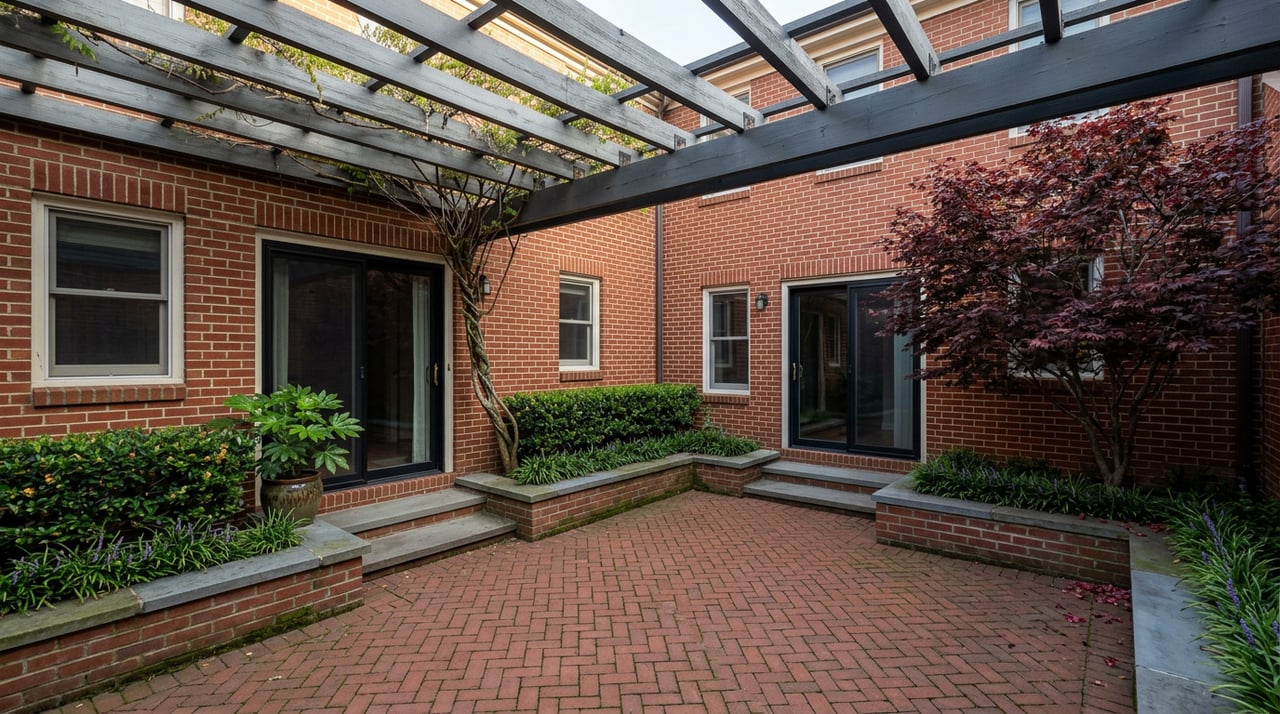
The Historic District covers a real mix of housing, from Canton Street condos and townhomes to single-family cottages tucked near Bulloch Hall and Barrington Hall, the district's best-known Greek Revival landmarks dating to the 1830s and 1840s. The National Register listing that anchors the district's protections dates to 1974, and it's the reason a renovation here plays by different rules than a renovation in a subdivision built in 2015.
For a buyer, the mix of property types matters because the COA process applies the same way to a Canton Street condo association's shared exterior as it does to a detached cottage a few blocks off Mimosa Boulevard. Anyone planning an addition, a garage conversion, or new construction on a historic lot needs to know the design review clears before the building permit does. That single fact changes how you sequence financing, contractor conversations, and your own moving timeline.
What to ask before you write an offer
Ask the seller directly whether they've filed for a Certificate of Appropriateness for any past exterior work, and ask to see it. Roswell's own guidance notes that unpermitted work can lead to fines and the reversal of alterations down the road, which becomes your problem the moment you own the house, not the seller's. A prior COA on file is a good sign the work was done through the correct channel. Its absence isn't automatically disqualifying, but it's a question worth asking your inspector and your closing attorney before due diligence runs out.
If your plans involve anything beyond a fresh coat of paint, build the orientation meeting and the Commission's review cycle into your calendar before you assume a contractor can start the week after closing. The Commission meets on a set schedule, not on demand, and a design that needs revision after a first hearing adds another full cycle to the wait.
A short FAQ
Does the paint exemption apply to HOA rules too? No. The Attorney General's opinion addresses the Historic Preservation Commission's authority under state and local ordinance. A homeowners association inside the district can still have its own paint or exterior guidelines written into its covenants, separate from the city's preservation review.
What if a previous owner did work without a Certificate of Appropriateness? Georgia's preservation guidance is clear that unpermitted material changes can be reversed and can carry fines. If you suspect a past renovation skipped this step, raise it with your inspector and attorney during due diligence rather than after closing.
How long does a Certificate of Appropriateness review usually take? The process runs on the Commission's regular meeting calendar rather than a fixed number of days, so the real variable is how far out the next meeting falls when you submit, plus whether your first design clears on the first try.
If you're weighing a historic Canton Street property against something newer on the edge of town, the paint rule and the permit sequence are two sides of the same lesson: this district is more flexible than its reputation in one place, and more procedural than a listing photo will ever show you in another. That's exactly the kind of detail worth talking through before you write an offer, not after.
Malka Shulman works with buyers across Roswell's historic core and the neighborhoods around it, and can walk you through what a specific property's history means for your renovation plans before you commit. Contact Realtor Malka to talk through your next move.